How to Choose an Industrial Brush for Mold Cleaning and Surface Preparation?
Release time: 2026-09-04
Table of Contents
Choosing a brush for industrial production is not simply about finding the hardest bristles or the most aggressive cleaning action. For mold cleaning and surface preparation, the right brush needs to match the workpiece, contamination, equipment, and desired surface result. A brush that works well for removing heavy residue may not be suitable for a precision mold with a delicate finish.
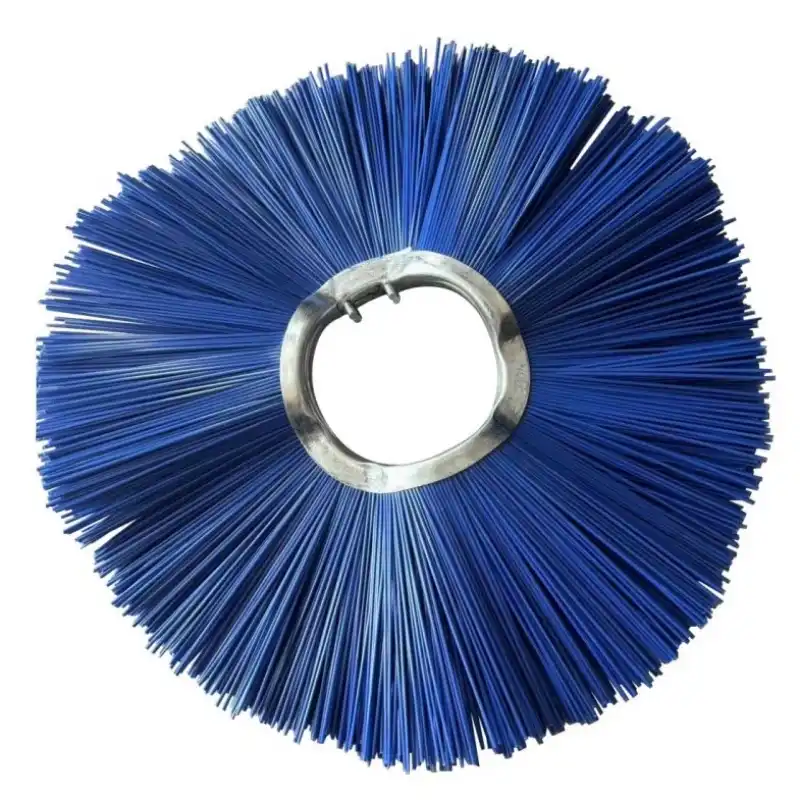
This is why brush selection should start with the actual application rather than the product name. At Weide Brush, different brush constructions can be considered according to cleaning requirements, surface conditions, and machine configurations. From a compact Industrial Brush for general cleaning to rotating brush solutions for automated production, the right combination can make cleaning more consistent while helping protect the workpiece.
Why Do Mold Cleaning and Surface Preparation Need the Right Industrial Brush?
Molds are exposed to repeated production cycles, and residues can gradually build up on their surfaces. Dust, oil, release agents, plastic residue, oxidation, and small particles may affect production quality if they are not removed properly. At the same time, excessive brushing can create scratches or unwanted changes to the mold surface.
Surface preparation has a slightly different goal. Instead of simply removing dirt, the process may require the removal of oxidation, burrs, old coatings, or surface contaminants before painting, coating, bonding, or finishing. This means the brush needs to provide the right level of contact and cleaning action.
A suitable Industrial Cleaning Brush should therefore provide enough cleaning performance without being unnecessarily aggressive. Understanding the actual purpose of the brushing process is the first step toward making the right selection.
How to Choose an Industrial Brush Step by Step?
Define the Specific Application Requirement
Before choosing a brush, identify what the brush is expected to do. Mold cleaning and surface preparation may look similar, but the required brushing action can be quite different.
For mold cleaning, the main objective may be removing residue while keeping the original surface condition intact. For surface preparation, a stronger brushing action may be required to remove oxidation, burrs, or other unwanted material.
It is useful to consider three questions:
What material needs to be removed?
How sensitive is the workpiece surface?
What surface condition is required after brushing?
For light dust and loose particles, a softer brush may be enough. Heavy residue or oxidation may require stiffer or abrasive filaments. Starting with these requirements helps narrow down the brush material and construction before considering specific dimensions.
Match the Brush Material to the Workpiece
Once the application is clear, the next consideration is the workpiece itself. A steel mold, coated metal surface, plastic component, or precision-machined part can have very different requirements.
Nylon and other synthetic filaments are often suitable when a balance between cleaning performance and surface protection is needed. Abrasive filaments can provide a stronger brushing action for demanding surface preparation, while wire filaments may be considered for tougher cleaning and material removal applications.
However, filament material should not be selected based on hardness alone. Working temperature, moisture, chemicals, brush speed, contact pressure, and cleaning frequency can all affect performance. A brush that is effective in a dry workshop may need a different configuration for a wet or chemically exposed production environment.
Choose the Right Brush Type for the Cleaning Process
After determining the material requirements, consider how the brush will actually work. Manual cleaning may require a different construction from an automated production line. If the workpiece moves continuously through a machine, a rotating brush can provide more consistent contact across the working area.
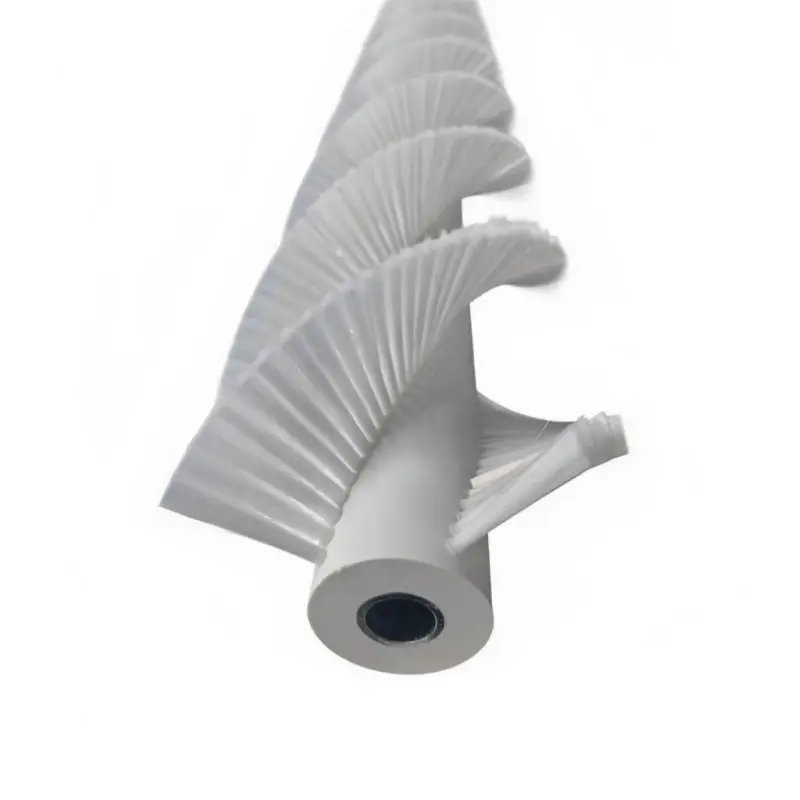
A Roller Brush is particularly useful for continuous cleaning and surface treatment. Its cylindrical structure allows it to rotate against a moving workpiece, making it suitable for conveyor systems, automated equipment, and repeated production operations.
For wider or continuous surfaces, a Cylinder Brush can also be configured with different diameters, working lengths, filament densities, and materials. The choice should depend on the movement of the workpiece, required contact area, and cleaning intensity rather than simply choosing the largest available brush.
Determine the Brush Specifications According to the Equipment
Even when the brush material and type are suitable, the wrong dimensions can reduce performance. Before ordering, check the available installation space and equipment requirements.
Important specifications may include brush diameter, working length, core size, shaft configuration, filament length, and filament density. For rotating applications, operating speed is also important because brush performance changes with rotation speed and contact pressure.
For automated systems, the brush should work as part of the complete machine rather than as an independent component. Providing the manufacturer with information about the equipment and application can make the selection process much more accurate.
For example, manufacturers can provide:
| Information | Details |
| Workpiece | Material and surface condition |
| Contamination | Type of contamination or material to be removed |
| Required result | Cleaning or surface preparation result |
| Operating conditions | Brush rotation and machine speed |
| Installation requirements | Available installation dimensions |
| Working environment | Dry, wet, high-temperature, or chemical working conditions |
Adjust the Brush According to the Final Surface Result
The final surface condition is the most practical way to evaluate brush selection. A brush may remove contamination quickly, but that does not necessarily mean it is the right solution if it damages the surface or produces an inconsistent finish.
For mold cleaning, the priority may be effective residue removal with minimal surface wear. For surface preparation, a controlled and uniform surface condition may be more important because it can influence the performance of a subsequent coating, bonding, or finishing process.
If the cleaning result is too weak, the brush construction may need greater filament stiffness, density, or contact pressure. If the brush is too aggressive, a softer filament, lower pressure, or different brush configuration may be more appropriate.
How Can You Tell Whether an Industrial Brush Is Right for Your Application?
A good brush selection should ultimately be judged by actual working performance. The right solution should remove the required contamination, provide stable results, fit the equipment, and maintain acceptable brush life without unnecessarily damaging the workpiece.
For manufacturers looking for a suitable Industrial Brush, Weide Brush can provide different brush configurations for mold cleaning, surface preparation, automated cleaning, and other industrial applications. Instead of choosing a standard brush based only on appearance or price, matching the brush construction to the working conditions can help achieve more reliable results.
Whether the application requires a rotating Roller Brush, a customized Cylinder Brush, or an Industrial Cleaning Brush for a specific production process, discussing the workpiece, cleaning objective, and equipment conditions with the brush manufacturer is a practical way to identify the right configuration.
FAQ
Which Industrial Brush is best for mold cleaning?
There is no single brush suitable for every mold. The right choice depends on the mold material, type of residue, surface sensitivity, and required cleaning result. Softer synthetic filaments may work well for delicate surfaces, while stiffer or abrasive options can be considered for heavier contamination.
Can an Industrial Brush be used for surface preparation?
Yes. Industrial brushes can be used to remove oxidation, burrs, residue, loose particles, and other surface contaminants before coating, painting, bonding, or finishing. The filament material and brush construction should match the workpiece and the required surface condition.
When should I choose a Roller Brush?
A Roller Brush is a practical choice when continuous or automated brushing is required. It can rotate against moving workpieces and provide consistent contact across a defined working area, making it suitable for production lines and automated cleaning systems.
How should I choose the brush material?
Start with the workpiece and the cleaning objective. Then consider contamination type, surface sensitivity, operating temperature, moisture, chemicals, machine speed, and contact pressure. These factors can help determine whether nylon, abrasive, wire, or another filament material is appropriate.