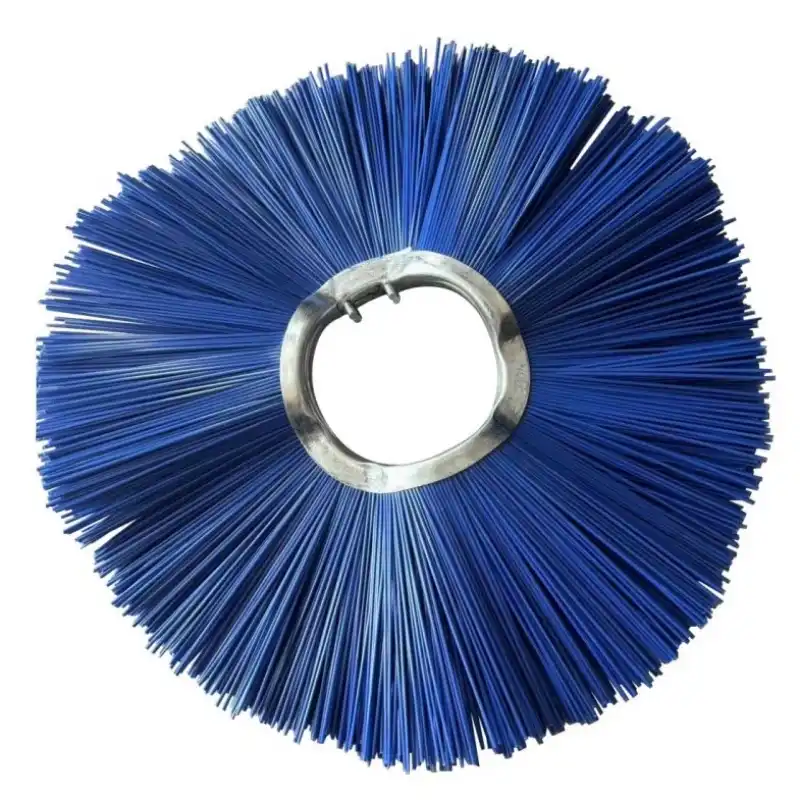
How Do Industrial Brushes Improve Solar Panel Cleaning Efficiency?
Release time: 2026-08-13
Table of Contents
Solar panels operate outdoors and are continuously exposed to dust, pollen, bird droppings, and fine airborne particles. Over time, this contamination can reduce the amount of sunlight reaching the module surface and increase the frequency of maintenance.
For large solar installations and automated cleaning equipment, a brush is more than a simple cleaning accessory. Filament material, hardness, length, brush diameter, and operating speed all influence cleaning performance and surface protection. Choosing the right Industrial Brush is therefore an important part of building an efficient Solar Panel Cleaning system.
Why Does Solar Panel Cleaning Require the Right Industrial Brush?
Solar panel cleaning is different from conventional industrial surface treatment.
The objective is not simply to remove contamination as aggressively as possible. The brush must remove dust and deposits while minimizing unnecessary friction or mechanical stress on the glass surface.
For large solar installations, manual cleaning also presents several practical challenges:
- Large cleaning areas limit manual productivity.
- Different contaminants require different cleaning intensity.
- Excessive brush pressure can increase surface wear.
- Filament wear gradually reduces cleaning consistency.
- Automated cleaning systems require specific brush dimensions and mounting configurations.
For these reasons, the brush should be designed around the cleaning equipment rather than selected solely by nominal size.
How Does a Roller Brush Work for Solar Panel Cleaning?
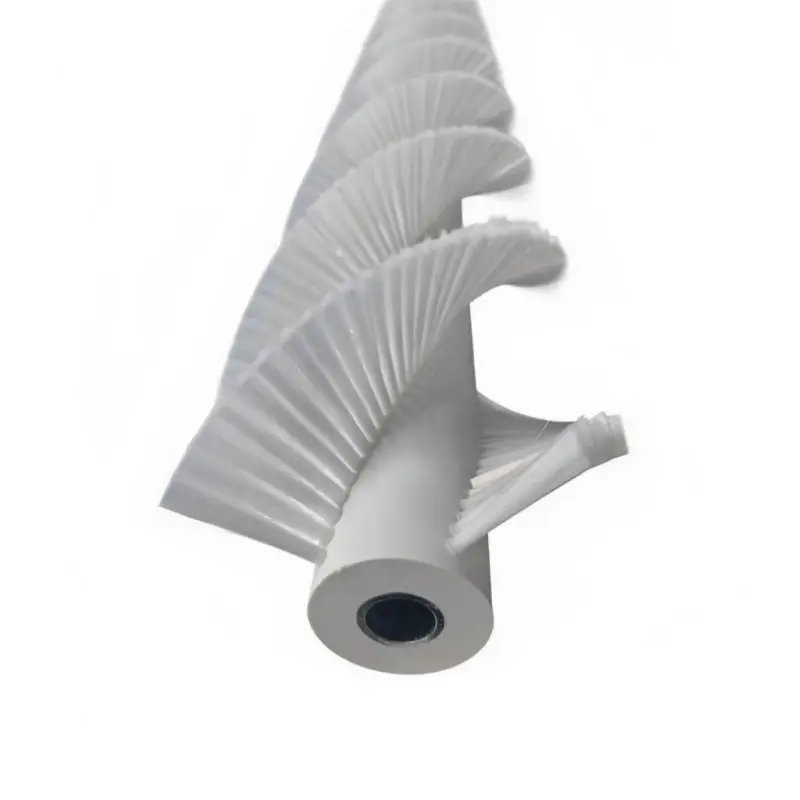
A Roller Brush used in automated solar cleaning equipment creates continuous contact with the panel surface as it rotates.
During operation, the filaments sweep across the working area and remove loose dust and other surface contaminants. This rotating structure is particularly suitable for large solar installations where consistent coverage is more important than manual flexibility.
Solar Panel Roller Brush can be configured according to equipment requirements, making this type of brush suitable for continuous automated cleaning applications. Weide Brush’s Industrial Brush range currently includes Solar Panel Roller Brush and OEM/ODM Customized Roller Brush products.
A properly designed Roller Brush typically requires consideration of:
- Brush diameter
- Overall working length
- Filament length
- Filament density
- Core construction
- Rotation speed
- Mounting configuration
These parameters are interconnected. Brush diameter affects the rotational path, while filament length influences the contact area and flexibility of the brush.
Which Filament Materials Are Suitable for Solar Panel Cleaning?
Filament selection is one of the most important factors affecting cleaning performance.
| Filament Material | Cleaning Aggressiveness | Surface Protection | Typical Consideration |
|---|---|---|---|
| Nylon | Medium | Good | Routine dust and light contamination |
| PP | Medium | Good | Large-area, cost-conscious cleaning |
| Soft Synthetic Filament | Gentle | High | Applications requiring stronger surface protection |
| Abrasive Filament | High | Lower | Generally unsuitable for direct contact with sensitive glass |
For Solar Panel Cleaning, harder does not automatically mean better.
Excessively stiff filaments or high contact pressure can increase mechanical friction against the glass. A better approach is to match filament characteristics with the type of contamination, cleaning frequency, brush speed, and contact pressure.
What Is the Difference Between a Cylinder Brush and a Conventional Cleaning Brush?
A Cylinder Brush provides a continuous cylindrical working surface.
When a cleaning machine needs to cover a relatively wide panel area, a Cylinder Brush or Roller Brush can rotate across the surface while working with an automated drive system.
Compared with handheld brushes, cylindrical designs are particularly suitable for:
- Automated cleaning equipment
- Continuous maintenance operations
- Large solar panel installations
- Systems requiring controlled brush pressure
- OEM projects with defined brush dimensions
The brush therefore needs to be evaluated as part of the entire mechanical system rather than as an isolated component.
How Should You Choose a Solar Panel Cleaning Brush?
A practical brush specification should start with the actual operating conditions.
1. Confirm the Panel and Machine Configuration
Identify the equipment structure, available installation space, drive method, and mounting configuration before selecting the brush.
2. Select the Filament Material
Choose Nylon, PP, or another suitable synthetic filament according to contamination type, cleaning intensity, and surface protection requirements.
3. Determine the Brush Dimensions
At minimum, confirm:
- Outer diameter
- Overall length
- Core diameter
- Filament length
If a replacement brush is being purchased, providing the existing brush as a physical sample can simplify specification matching.
4. Consider Operating Speed
Brush RPM influences how the filaments interact with the panel surface. Brush diameter, rotational speed, and filament characteristics should therefore be considered together.
5. Match the Brush to the Cleaning Method
Dry cleaning, wet cleaning, and automated systems equipped with dust collection may require different brush structures and filament configurations.
Why Does a Custom Industrial Brush Matter for Solar Cleaning Equipment?
There is rarely a universal brush specification that fits every solar cleaning system.
Different machines may require different:
- Brush diameters
- Working lengths
- Filament materials
- Filament densities
- Core materials
- Mounting structures
For OEM equipment manufacturers and large solar O&M companies, a custom Brush Roller can therefore be more practical than adapting a generic brush.
Providing equipment drawings, an existing brush sample, installation dimensions, and operating conditions allows a manufacturer to evaluate the brush structure more accurately.
Why Choose Weide Brush for Solar Panel Cleaning?
Weide Brush has more than 20 years of custom brush manufacturing experience and supplies Industrial Brush solutions for cleaning, polishing, sweeping, and surface preparation applications. Its current product range includes Solar Panel Roller Brush, OEM/ODM Customized Roller Brush, and other Cylinder Brush products.
For customers sourcing or developing Solar Panel Cleaning Brushes, the company can work from equipment dimensions, brush specifications, samples, or application requirements.
If you are developing automated solar cleaning equipment or replacing an existing Brush Roller, providing the current brush dimensions, drawings, or sample is a practical starting point for selecting the right brush configuration.
FAQ
Can industrial brushes be used for solar panel cleaning?
Yes, but the brush must be selected according to the panel surface, contamination type, filament characteristics, and contact pressure. Not every Industrial Brush is suitable for direct contact with solar module glass.
What type of brush is commonly used for automated solar panel cleaning?
Roller Brushes and Cylinder Brushes are commonly suited to automated systems because they provide a continuous working surface and can be integrated with rotary drive mechanisms.
Is Nylon suitable for solar panel cleaning?
Nylon can be suitable for certain solar cleaning applications, but filament diameter, hardness, density, and length should be matched to the contamination and equipment conditions.
What information is needed for a custom solar panel cleaning brush?
Useful information includes brush diameter, overall length, core dimensions, filament material, filament length, mounting structure, machine model, and operating conditions.
Can Weide Brush customize solar panel cleaning brushes?
Yes. Weide Brush provides customized Industrial Brush and Roller Brush manufacturing based on drawings, samples, dimensions, and application requirements.