How Do Sweeper Brushes Improve Street Cleaning Performance?
Release time: 2026-08-14
Table of Contents
Street cleaning may look simple from the outside, but municipal sweepers and industrial cleaning equipment operate under constantly changing conditions. Brush material, construction, rotational speed, contact pressure, and road surface all influence how efficiently debris can be collected.
A properly specified Sweeper Brush must handle more than loose dust. Depending on the application, it may need to remove sand, gravel, leaves, and other road debris while maintaining consistent performance over long operating cycles. For Street Sweeping and Gutter Cleaning, the relationship between the Main Broom, Side Brush, and filament selection is particularly important.
Why Does a Sweeper Brush Affect Street Cleaning Performance?
Road sweeping equipment operates in environments that are considerably less predictable than controlled factory floors.
A typical route may contain:
- Fine dust
- Sand
- Gravel
- Leaves
- Small debris
- Moisture
- Oil-contaminated particles
A brush that is too soft may struggle with heavier debris, while an excessively stiff brush can increase wear, noise, and machine load.
The objective is therefore not simply to select the hardest possible brush. The filament material, density, length, and machine operating parameters need to work together.
What Is the Difference Between a Main Broom and a Side Brush?
Main Broom and Side Brush perform different jobs within a road sweeping system.
| Factor | Main Broom | Side Brush |
|---|---|---|
| Position | Central cleaning area | Side of the machine |
| Primary function | Collects debris across the main cleaning path | Cleans edges, curbs, and corners |
| Coverage | Broad | Targeted |
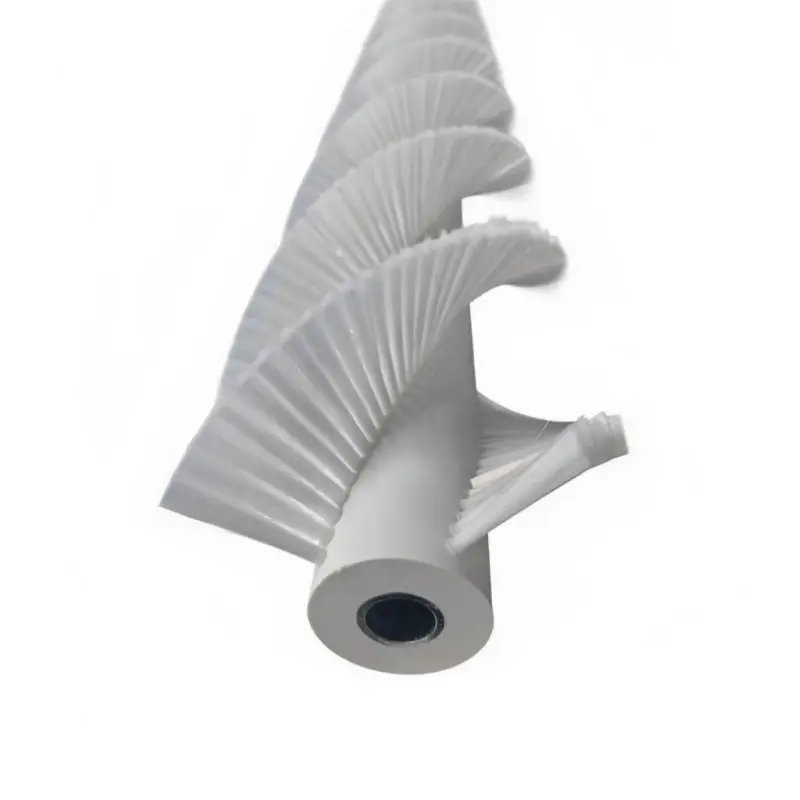
| Common construction | Roller / Spiral Wound | Circular / Segment |
| Typical application | Main road surface | Gutter Cleaning |
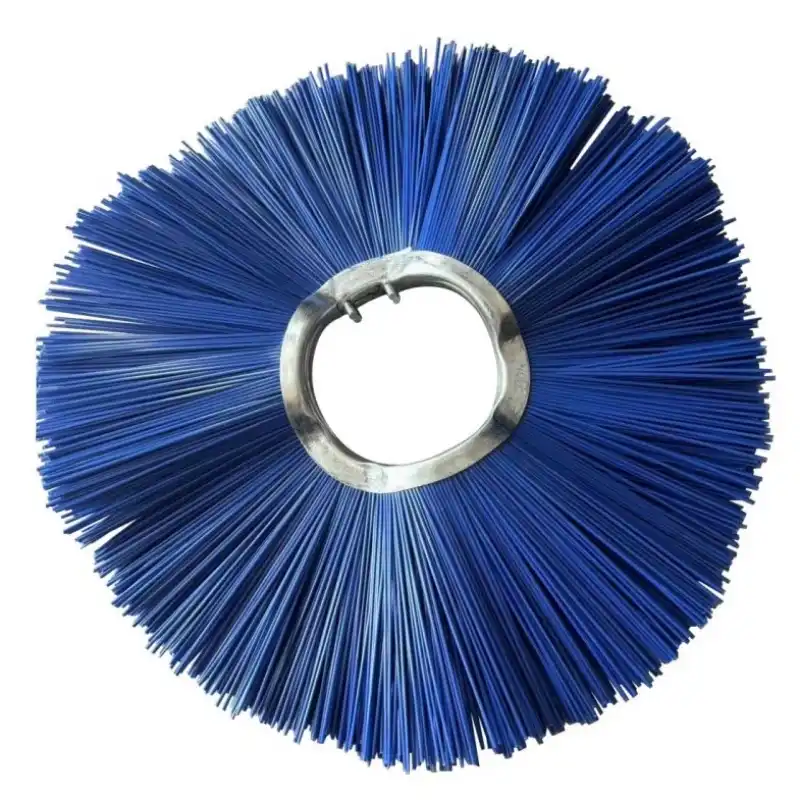
Weide Brush’s Road Sweeper range includes both Road Sweeper Main Brush and Road Sweeper Side Brush.
For this reason, the two brush types should not be treated as interchangeable components.
How Does a Main Broom Improve Street Sweeping Efficiency?
The Main Broom operates across the primary cleaning area and is responsible for handling a large amount of road surface during each pass.
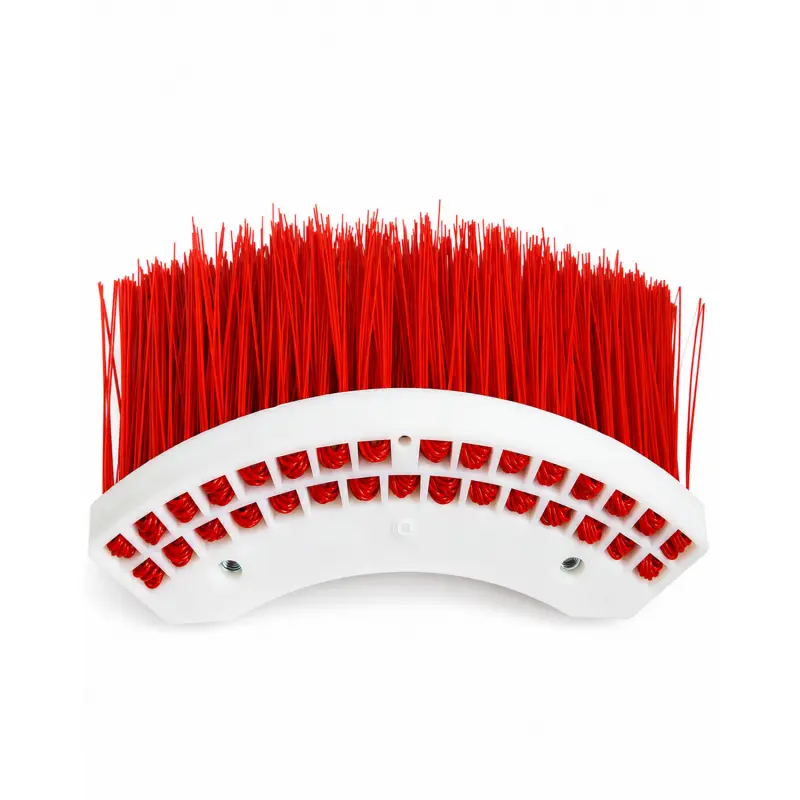
Weide Brush’s Road Sweeper Main Brush can be manufactured using Spiral Wound or Staple Set construction. Depending on the sweeper design, it can also be supplied as one continuous piece or as individual segments, with Poly and Poly/Wire fill combinations available.
This flexibility is important because brush configuration needs to correspond to the machine’s working width, installation method, and operating conditions.
In practical operation, Main Broom performance is influenced by:
- Brush diameter
- Overall length
- Filament material
- Filament density
- Brush pressure
- Rotation speed
An incorrect diameter or filament length can lead to incomplete coverage, residual debris, or accelerated filament wear.
Why Is a Side Brush Important for Gutter Cleaning?
The center of the road is not necessarily the most difficult area to clean.
Dust, sand, leaves, and other debris are often pushed toward curbs, gutters, walls, and other edges. These areas can be difficult for the Main Broom to reach consistently.
The Side Brush helps move debris from the edge of the road toward the machine’s primary collection path.
For Gutter Cleaning, brush diameter, filament length, material, and density are especially important.
Weide Brush’s Gutter Broom, for example, can use Poly / Steel Wire materials and is available in a 660 mm base diameter or customized dimensions. It is designed for street sweepers and intended to handle dust, sand, gravel, and other road debris.
For sweepers operating on municipal roads, parking areas, airports, or industrial sites, the Side Brush should therefore be specified according to the actual edge-cleaning conditions.
Which Filament Material Is Best for Street Sweeping?
Filament material affects wear resistance, flexibility, and sweeping aggressiveness.
| Filament Material | Wear Resistance | Sweeping Aggressiveness | Typical Application |
|---|---|---|---|
| PP | Good | Medium | Routine roads and light debris |
| Nylon | High | Medium | Applications requiring longer service life |
| Steel Wire | Very High | High | Gravel and heavy-duty debris |
| Mixed Filament | High | Adjustable | Balanced cleaning and durability |
PP is often attractive for its cost efficiency and chemical resistance, while Steel Wire can provide stronger mechanical action in demanding environments.
However, steel wire is not automatically the best choice for every route. When surface wear, noise, or cleaning aggressiveness must be controlled, material selection should be evaluated together with filament density and machine settings.
How Can You Reduce Premature Sweeper Brush Wear?
Brush failure is not always caused by poor filament quality.
Several operating factors deserve attention.
Brush Pressure
Excessive contact pressure increases friction and can shorten filament life.
Rotation Speed
A higher rotational speed may increase filament flexing and wear, while insufficient speed can affect debris transport and cleaning effectiveness.
Filament Density
Low density can reduce coverage, while excessive density may increase machine load.
Road Conditions
Rough pavement, gravel, concrete, and other abrasive surfaces can significantly accelerate filament wear.
Brush Installation
Incorrect installation or rotational imbalance can also cause uneven wear and inconsistent cleaning.
How Should You Choose a Sweeper Brush for Your Machine?
Before placing an order, buyers should confirm several technical details.
1. Machine Model
Provide the exact sweeper or cleaning machine model whenever possible.
2. Brush Type
Confirm whether the application requires a Main Broom, Side Brush, Gutter Broom, or another configuration.
3. Dimensions
Provide key measurements such as diameter, length, core dimensions, and mounting dimensions.
4. Filament Material
Select PP, Nylon, Steel Wire, or Mixed Filament according to debris type and road conditions.
5. Working Conditions
Describe the road surface, debris type, operating hours, cleaning frequency, and environmental conditions.
6. Replacement Requirements
For replacement projects, an existing brush sample or technical drawing can significantly simplify specification matching.
Why Is a Custom Sweeper Brush Valuable for B2B Buyers?
Road sweeping machines vary significantly in brand, model, mounting structure, and operating configuration.
Even two machines described as road sweepers may use different brush dimensions, connection structures, and operating speeds. Simply purchasing a product labeled “Road Sweeper Brush” does not necessarily guarantee compatibility.
A custom brush can instead be developed around:
- Brush dimensions
- Filament material
- Filament density
- Core type
- Mounting structure
- Segment configuration
For municipal cleaning companies, equipment distributors, and aftermarket parts suppliers, this approach can reduce compatibility issues and improve consistency across bulk orders.
Why Choose Weide Brush for Street Sweeping?
Weide Brush supplies a broad range of Sweeper Brush products, including Road Sweeper Main Brush, Road Sweeper Side Brush, Gutter Broom, Wafer Brush, and other machine cleaning brushes. Its product information confirms support for PP, Steel Wire, and Mixed configurations as well as customized dimensions for Main Brush applications.
For Street Sweeping, Gutter Cleaning, and municipal or industrial cleaning applications, Weide Brush can develop brush configurations according to machine models, dimensions, filament materials, and operating requirements.
If you are sourcing a replacement Sweeper Brush, providing the machine model, existing brush sample, or technical drawing is a practical way to accelerate specification matching.
FAQ
What is the difference between a Main Broom and a Side Brush?
The Main Broom handles the primary road surface across the machine’s main cleaning path, while the Side Brush is typically used for edges, curbs, gutters, and corners.
What type of brush is best for street sweeping?
There is no universal Sweeper Brush for every road. Selection should be based on debris type, road surface, machine configuration, operating frequency, and the required balance between cleaning aggressiveness and wear resistance.
Are steel wire brushes suitable for gutter cleaning?
Yes, Steel Wire can be suitable for demanding Gutter Cleaning applications where stronger mechanical sweeping action is required. The exact material and density should still be matched to the road surface and machine.
How often should a sweeper brush be replaced?
Replacement intervals depend on road conditions, operating hours, filament material, contact pressure, and usage frequency. Instead of following a fixed calendar schedule, buyers should monitor filament wear and actual cleaning performance.
Can Weide Brush manufacture custom Sweeper Brushes?
Yes. Weide Brush supplies Road Sweeper Main Brush, Road Sweeper Side Brush, Gutter Broom, and other sweeping products, with customization available for dimensions, filament materials, and brush structures.