How Does a Disc Brush Improve Cleaning Performance on Different Floor Surfaces?
Release time: 2026-09-25
Table of Contents
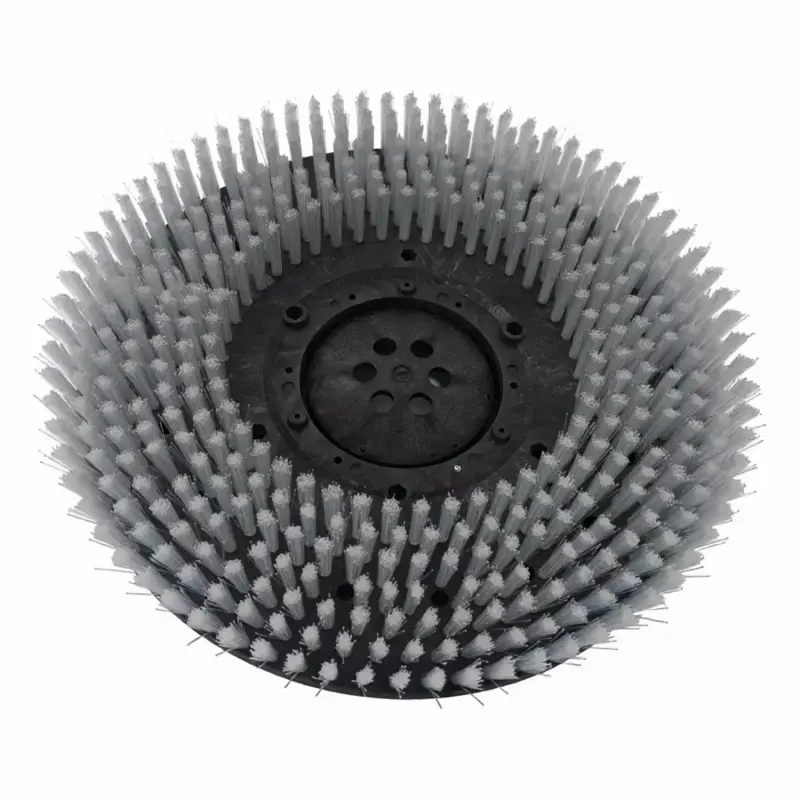
A floor scrubber can only perform as well as the brush working against the surface. When the brush material, size, and configuration match the cleaning task, the machine can remove dirt more consistently without putting unnecessary stress on the floor. This is why choosing the right Disc Brush matters in commercial buildings, warehouses, factories, parking areas, and other spaces where floor cleaning is part of regular maintenance.
Different floors also create different cleaning challenges. Smooth tile may only need routine removal of dust and footprints, while concrete floors can hold heavier dirt, sand, and industrial residue. A suitable brush needs to provide enough contact with the surface while remaining compatible with the machine. Looking at the cleaning task first, rather than choosing a brush based only on its appearance or size, is a more practical way to achieve reliable results.
Floor Cleaning Tasks and Brush Requirements
Not every cleaning job requires the same level of brushing action. In shopping centers, offices, hotels, and public buildings, scrubber machines are often used for frequent maintenance rather than aggressive deep cleaning. The brush needs to handle dust, footprints, light stains, and everyday dirt while maintaining stable performance over repeated cleaning cycles. In these environments, a balanced brush can help operators clean efficiently without excessive surface contact.
Industrial facilities can present a different challenge. Warehouses, workshops, manufacturing areas, and parking facilities may accumulate fine particles, mud, grease, or other stubborn residues. Here, the brush has to work effectively against a more demanding surface. A properly selected Floor Scrubber Disc Brush can help loosen accumulated dirt while allowing the machine to collect the loosened material during the cleaning process. Matching brush performance to the actual workload is therefore more useful than simply choosing the most aggressive brush available.
Choosing a Brush for Different Floor Surfaces
The floor itself is one of the first things to consider when selecting a cleaning brush. Ceramic tile, polished concrete, epoxy flooring, textured concrete, and other hard surfaces do not respond in exactly the same way to brushing. A brush that works well on a rough industrial floor may be unnecessarily aggressive for a smoother commercial surface, while a softer configuration may struggle to remove heavy contamination from textured concrete.
For routine commercial cleaning, the goal is usually to achieve effective contact without excessive abrasion. Industrial floors may require stronger brushing action because dirt can become trapped in surface texture or mixed with fine particles. The operating environment also matters. A warehouse with frequent forklift traffic, for example, may require a different cleaning approach from a hotel lobby. Considering the floor together with the type and amount of contamination makes brush selection much more practical.
Nylon vs. Polypropylene vs. Plastic Disc Brushes
Brush filament material directly influences how a brush behaves during cleaning. Nylon is commonly considered when durability, flexibility, and consistent contact are important. Polypropylene can be a practical choice for routine floor cleaning because of its resistance to moisture and its ability to maintain stable performance in common cleaning environments. Plastic brush configurations can also be used for general floor maintenance where a suitable balance between cleaning action and surface care is required.
The best material is not necessarily the hardest one. It depends on what the machine is expected to clean and how frequently it operates. A commercial facility carrying out daily maintenance may prioritize consistent performance and service life, while an industrial site may place greater emphasis on stronger dirt removal. The following comparison provides a simple starting point for matching brush material to common applications.
| Brush Material | Typical Characteristics | Suitable Applications |
| Nylon | Durable, flexible, and suitable for repeated cleaning | Commercial floors, hard surfaces, routine maintenance |
| Polypropylene | Moisture-resistant and suitable for general cleaning | Warehouses, public areas, commercial facilities |
| Plastic | Practical for standard floor maintenance | General-purpose floor cleaning |
How Brush Size Affects Cleaning Efficiency
Brush diameter has a direct relationship with the working area covered by the machine. A larger brush can cover more floor during each pass, which can be useful when cleaning broad, open spaces. Smaller brushes, on the other hand, can be more practical when the machine needs to work around obstacles or in areas with limited maneuvering space. The correct size is therefore determined by both the machine and the cleaning environment.
Commercial floor scrubbers are available in different configurations, so brush dimensions should always be checked against the machine before replacement. For example, Weide Brush offers options such as a 16-inch nylon brush, a 19-inch floor scrubber brush, a 20-inch plastic brush, and a 300 mm polypropylene brush. These different sizes demonstrate why brush selection cannot be based on diameter alone. The mounting structure, center hole, machine model, and available working space also need to match.
Brush Contact and Actual Cleaning Performance
Cleaning performance depends on more than filament material. The way the bristles contact the floor also affects how effectively dirt is loosened. Brush density, filament length, machine pressure, rotation, and the condition of the floor all contribute to the final result. If contact is too light, the brush may not loosen embedded dirt effectively. If pressure is unnecessarily high, the brush can wear faster and place additional load on the machine.
A good setup creates enough contact to remove contamination while allowing the brush to work consistently across the floor. This becomes particularly important when machines operate for long periods. In a busy warehouse or commercial facility, inconsistent brush contact can lead to uneven cleaning and more frequent maintenance. A properly matched Floor Cleaning Disc Brush should work with the machine rather than forcing the operator to compensate through excessive pressure or repeated passes.
Matching Disc Brushes to Floor Scrubber Machines
Machine compatibility is another important part of the selection process. Different floor scrubber brands and models can use different brush diameters, mounting systems, and center-hole configurations. Even when two brushes look similar, their mounting structures may not be interchangeable. Checking the machine model and original brush specifications before ordering can prevent compatibility problems.
This is particularly relevant for replacement brushes used on machines from brands such as Tennant, Karcher, Viper, and Nilfisk. Weide Brush provides different brush configurations designed around specific machine requirements, including its 16-inch, 19-inch, 20-inch, and 300 mm options. Instead of treating these products as interchangeable, users should compare the original brush dimensions, mounting method, filament type, and cleaning application. This approach makes replacement easier and reduces the risk of choosing a brush that fits physically but does not perform as expected.
When a Custom Disc Brush Makes More Sense
Standard sizes are convenient, but not every cleaning machine or application follows a common specification. Some equipment requires a particular center hole, brush diameter, filament length, or filament density. Customization can also be useful when a facility has unusual floor conditions or needs a specific balance between cleaning strength and surface protection.
For OEM and replacement applications, a custom brush can be developed around machine drawings, samples, dimensions, or existing brush specifications. Parameters such as diameter, filament material, filament length, density, and center configuration can be adjusted according to the application. This is especially useful for equipment manufacturers, distributors, and businesses managing multiple types of cleaning machines. A Custom Disc Brush can provide a more precise fit when an off-the-shelf product cannot meet the required machine or cleaning specifications.
Making the Right Disc Brush Choice
The easiest way to approach brush selection is to start with the cleaning job rather than the product name. First, identify the floor surface and the type of contamination that needs to be removed. Next, check the scrubber machine’s brush dimensions and mounting structure. From there, consider the filament material, brush density, and required cleaning intensity. This process helps narrow the options without relying on trial and error.
For everyday commercial cleaning, a balanced nylon or polypropylene configuration may be suitable depending on the floor and machine. Heavier-duty environments may require a different filament configuration or stronger brushing action. The key is to create a combination that works with the machine’s pressure, rotation, and cleaning system. When these factors are considered together, a Disc Brush becomes more than a replaceable component—it becomes an important part of the overall floor cleaning process.
FAQ
What is a disc brush used for?
A disc brush is commonly installed on floor scrubber and cleaning machines to loosen and remove dirt from hard floor surfaces. It can be used for routine maintenance as well as more demanding cleaning applications, depending on the filament material and brush configuration.
Is nylon or polypropylene better for floor cleaning?
Neither material is universally better. Nylon can be a good option when durability and consistent brushing contact are important, while polypropylene is often suitable for routine cleaning and environments where moisture resistance is useful. The right choice depends on the floor and cleaning conditions.
How do I know what size disc brush my machine needs?
Check the original brush diameter, center hole, mounting structure, and machine model. Common sizes such as 16 inches, 19 inches, 20 inches, and 300 mm are available, but compatibility should always be confirmed before ordering.
Can disc brushes be customized for different floor scrubber machines?
Yes. Disc brushes can be customized according to dimensions, filament material, filament length, density, center-hole configuration, and other specifications. Custom production is particularly useful when the machine uses a non-standard brush size or mounting structure.