How to Choose the Right Strip Brush for Industrial Applications?
Release time: 2026-10-30
Table of Contents
Choosing the right brush for an industrial application involves more than finding a product that fits a mounting slot. The brush must perform reliably under specific working conditions, whether it is used to control dust, clean equipment, protect moving parts, or support surface treatment. Brush base design, filament material, dimensions, and installation method all influence the final result. A brush that works well in one production environment may wear too quickly or deliver poor results in another.
When selecting an industrial strip brush, start by identifying the task it needs to perform. Does it need to remove loose debris, reduce dust entering a machine, or make controlled contact with a workpiece? These requirements determine the brush configuration and help narrow down suitable options. Understanding the operating environment before comparing products also makes it easier to communicate with suppliers and avoid unnecessary replacements. A well-matched brush can improve cleaning consistency, simplify maintenance, and help keep industrial equipment running smoothly.
Why Strip Brush Design Matters in Industrial Applications
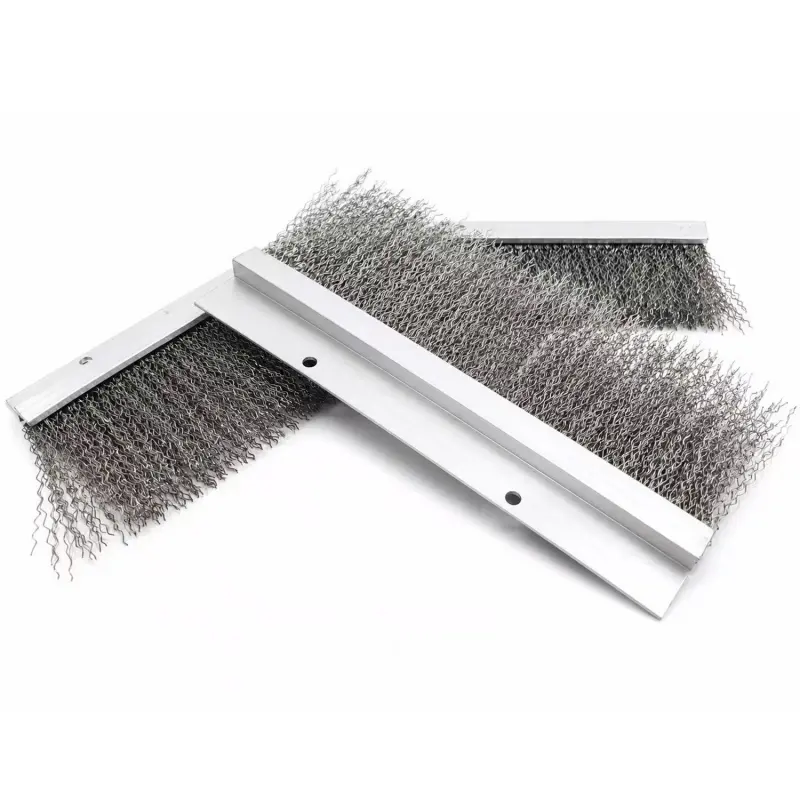
Strip brushes are used across manufacturing, material handling, equipment maintenance, and specialized industrial systems. Their linear design allows them to be installed along edges, openings, conveyor sections, and other areas where a conventional brush may be difficult to position. Depending on the filament configuration and installation, they can help remove loose particles, reduce dust movement, protect surfaces, or provide a flexible contact barrier.
However, these applications place different demands on the brush. A brush used to control dust around a moving machine component may require flexible filaments that maintain contact without creating excessive resistance. A brush used for surface treatment may need a more abrasive working surface. In either case, selecting a product based only on its appearance can lead to disappointing results.
Consider the contact pressure, operating speed, surrounding temperature, moisture, and type of debris before choosing a design. These factors affect filament deflection, wear, and cleaning performance. The goal is not to select the stiffest or densest brush available, but to find a configuration that performs its intended task without placing unnecessary stress on the equipment or workpiece.
Plastic Bottom vs. Aluminum Alloy Bottom Strip Brushes
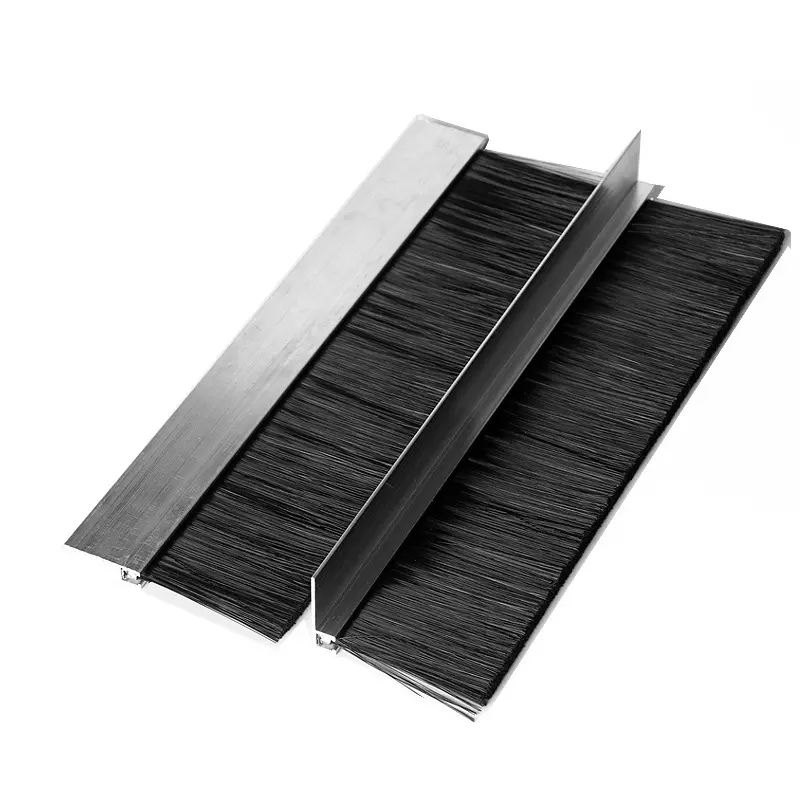
The brush base determines how the brush is supported and attached to the equipment. Plastic Bottom Strip Brushes and Aluminum Alloy Bottom Strip Brushes offer different structural options, so the choice should reflect the installation requirements and operating environment rather than a general assumption that one material is always better.
Plastic-bottom designs may suit applications where the specified plastic offers adequate dimensional stability and environmental resistance. Before choosing one, check the material’s compatibility with operating temperatures, cleaning agents, moisture, and mechanical loads. The actual plastic grade matters because different formulations can behave differently under the same conditions.
Aluminum-alloy bases can provide a rigid mounting structure for industrial installations. They may be suitable when the brush needs to remain securely positioned along a machine edge or within a dedicated mounting channel. Nevertheless, the alloy, surrounding environment, and fastening arrangement should be evaluated, particularly where corrosion or repeated mechanical stress is a concern.
| Selection factor | Plastic bottom | Aluminum alloy bottom |
| Main consideration | Material compatibility and stability | Rigidity and mounting requirements |
| Environmental checks | Temperature and chemical exposure | Corrosion and operating loads |
| Installation checks | Fit and fastening method | Channel dimensions and fastening method |
Always confirm the base dimensions and attachment method before ordering. Even a suitable brush material will not perform properly if the base does not fit the equipment.
How to Choose the Right Brush Filament Material
Filament material directly affects how a brush interacts with the workpiece. Soft, flexible filaments may be appropriate for light cleaning or contact with sensitive surfaces, while stiffer filaments can provide more resistance when removing stubborn debris. Abrasive configurations serve different purposes and should be selected according to the required surface finish and material removal.
For general cleaning, consider whether the brush needs to collect dust, move larger particles, or reach into narrow spaces. For surface treatment, assess the workpiece material and the degree of abrasion required. Excessively aggressive filaments can damage coatings or leave unwanted marks, while filaments that are too soft may fail to achieve the desired result.
Other factors matter as well. Moisture, chemicals, temperature, and continuous friction can affect filament flexibility and service life. Brush density also influences performance: a denser arrangement may increase contact coverage, but it can restrict debris passage or increase resistance in some applications.
If the brush is used on delicate materials, test a sample on a representative surface before placing a large order. This helps verify cleaning effectiveness and surface compatibility under realistic operating conditions.
Choosing Brush Dimensions and Mounting Methods
Correct dimensions are essential for reliable performance. Filament length determines how far the bristles extend from the base and how much room they have to bend during operation. If the filaments are too short, they may not reach the target surface. If they are too long for the application, excessive deflection can reduce control and contribute to uneven wear.
Brush length, base width, cross-sectional profile, and mounting position should match the equipment design. For conveyor systems or moving components, also consider operating speed and the amount of contact pressure required. A brush that presses too firmly against a moving surface may experience accelerated wear or create unnecessary resistance.
Before ordering a replacement, measure the existing brush and inspect how it is secured. Where possible, provide the supplier with a drawing, photographs, equipment details, and the required working length. These details help clarify whether a standard configuration will work or whether a modified design is needed.
For new equipment, it is often easier to specify brush dimensions during the design stage than to modify the mounting arrangement later. Early coordination between the equipment designer and brush supplier can reduce installation problems and improve long-term consistency.
Strip Brush Applications in Dust Control and Surface Treatment
One common use for a strip brush is controlling dust and loose debris around machine openings, conveyor systems, and moving equipment. The filaments form a flexible barrier that can reduce the passage of particles while allowing movement where a rigid cover would be impractical. The effectiveness depends on filament length, density, contact position, and the size of the opening.
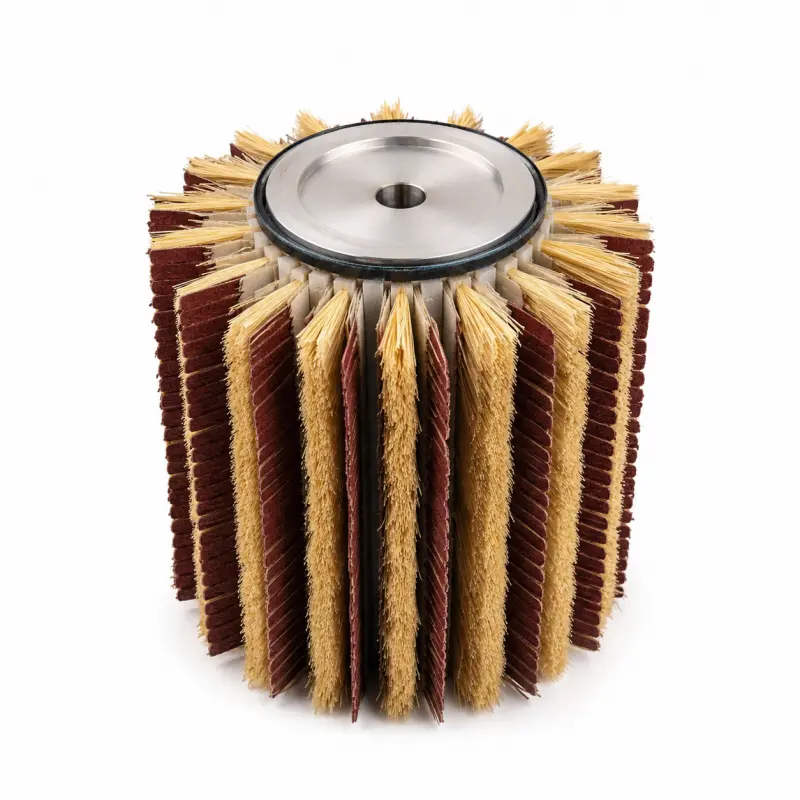
Strip brushes can also support cleaning and surface treatment when configured with suitable filaments. For example, the Sandpaper and Sisal Strip Brush listed in the product range is relevant to applications requiring an abrasive brush structure. The appropriate configuration depends on the workpiece material, the desired finish, and the intensity of the treatment.
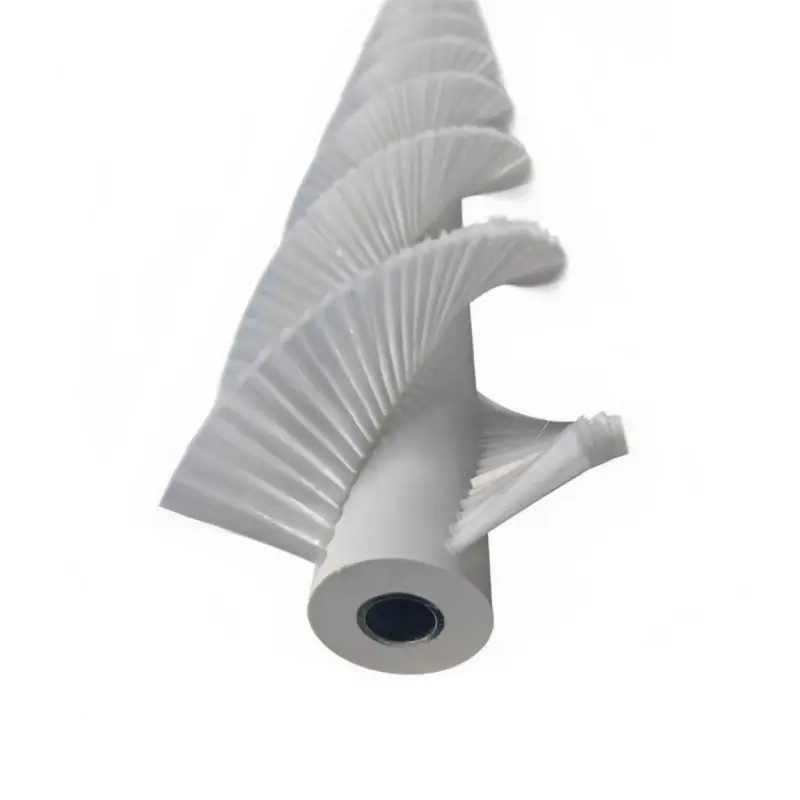
Specialized applications may require additional attention. The Wind Turbine Anti-Static Dust-Proof Strip Brush, for instance, suggests a use case where dust control and static-related requirements need to be considered together. Buyers should verify the product’s actual material specifications and electrical characteristics rather than assuming that every dust-proof brush provides a particular level of static dissipation.
In all these applications, define the expected result before selecting the brush. A product designed for dust control should not automatically be treated as a substitute for an airtight seal, and a brush intended for surface treatment may be unsuitable for delicate cleaning.
When Should You Consider a Custom Strip Brush?
A custom strip brush may be worth considering when standard products cannot meet the installation dimensions, filament requirements, or operating conditions. This commonly occurs when equipment has a non-standard mounting channel, the brush must fit into a confined space, or the application requires a particular combination of filament length and density.
Customization can also help when an existing brush wears unevenly or fails to deliver consistent results. Instead of changing products repeatedly, review the working conditions with the supplier. Excessive pressure, an unsuitable filament material, incorrect dimensions, or misalignment may be contributing to the problem.
When contacting a manufacturer, provide as much practical information as possible. Useful details include the application, workpiece material, operating speed, temperature, moisture exposure, installation dimensions, and expected cleaning or sealing result. Photos and technical drawings can help clarify the requirements.
A reliable strip brush manufacturer should be able to discuss these factors and explain which specifications need confirmation. For demanding applications, request a sample or trial installation before committing to a large production order. Testing under actual operating conditions is a practical way to check fit, performance, and wear.
FAQ
1. What is a strip brush used for?
Strip brushes are commonly used for dust control, gap sealing, equipment cleaning, surface contact, and selected surface-treatment tasks. Their suitability depends on the filament material, base design, dimensions, and working environment.
2. How do I choose between a plastic and aluminum alloy brush base?
Compare the mounting requirements, environmental conditions, mechanical loads, and material compatibility. Plastic and aluminum alloy bases have different properties, so the best option depends on the actual application and product specifications.
3. Can strip brushes be customized for specific equipment?
Yes. Custom configurations may be available for non-standard dimensions, mounting profiles, filament materials, lengths, and densities. Providing drawings and operating details helps the manufacturer assess the requirements.
4. How can I extend the service life of an industrial strip brush?
Use the correct filament material and dimensions, avoid excessive contact pressure, check mounting alignment, and inspect the brush regularly for uneven wear or damage. Replace it when performance no longer meets the application requirements.